Visit us on Google+ Techitech - blog for gadgets and devices: 2014

Saturday, 13 December 2014

Smartphones of 2015


             Get Ready For Top New Smartphones


                             Samsung galaxy S6

                              IT is a new phone of samsung expected to launch in march,2015
 A phone with 5.5-inch display with a Quad HD panel featuring 1140x2560 pixels. Under the hood would be a powerful 64-bit processor, which could be either an Exynos 7420 chipset or a Qualcomm Snapdragon 810 chipset. 3GB of RAM would be supplied for the chipset and around 32GB of storage is incorporated. A 20MP rear camera along with a 5MP front camera make up the shooters and an Android 5.0 Lollipop is what runs them all. The Samsung Galaxy S6 could sport a metal frame and could also have a possible inclusion or variant of the Edge display.


                                     Apple iphone 7

 Expected to be launch in september 2015
Nothing much has been revealed or leaked as yet about Apple’s next flagship. However, speculations and expectations state that the iPhone 7 (assuming what it would be called) would sport the A9 Chipset, an HD or 2K display, 256GB of internal storage, 16MP or 20MP camera (since they now have the camera expert onboard) and definitely a stronger frame to avoid the famous Bendgate issue. 


                              Sony experia Z4

A phone with 5.4-inch Quad HD Triluminos display, powered by a Snapdragon 805 processor and run on Android 5.0 Lollipop. It added that the device may have a 20.7MP main camera and 4.8MP front snapper, house a 3420 mAh battery, and come packed with 4GB RAM. 

The second version of  this mobile has 5.5-inch screen, powered by a Qualcomm Snapdragon 810 processor, feature a Qi Wireless Charging, and come packed with 32GB internal memory and 4GB RAM but without microSD card slot.
Meanwhile, it is also reported that Sony might release Xperia Z4 Ultra along with Sony Xperia Z4 and several other mid-range devices at the CES 2015. The phablet is expected to sport a 5.9-inch Triluminos display, powered by Snapdragon 805 processor, have a 16MP camera and come packed with 4GB RAM.


                                  HTC One M9

IT is a smartphone with Snapdragon 810  processor. It will have a 5-inch display with FHD resolution. It will also have a 13 megapixel or UltraPixel 4MP front camera on board, coupled with a 20.7 megapixel main camera. It will also have 3GB RAM and also availaible in 64GB and 128GB storage space.


Friday, 17 October 2014

Apple Ipad Air 2 and Ipad mini 3


Recently Apple has introduced its  new iPads including the updated iPad Mini 3 and its thinnest tablet ever, the iPad Air 2.
Both the products look identical to the previous ones but they are more advance , deligated and faster than the previous versions. Apple says this chip is 40 per cent faster than previous processor and has 180 times the graphic performance of the original iPad.   But ipad mini 3 is come with the A7 screen as the previous generation. One more thing is that ipad Air 2 is just half that original ipad.


SPECIFICATIONS:

DISPLAY AND WEIGHT

 Apple has kept the screen size at 9.7-inches for the iPad Air 2 with a 2048×1536 resolution at 264 pixels per inch (ppi). Apple has, however, introduced an anti-reflective coating on the tablet (the same as the iPhone) to reduce reflections on the tablet by 56 percent. If users were hoping that the iPad Air 2 would have a sharper screen, that hasn’t changed. iPad mini 3’s screen is also at 7.9-inches with a 2048×1536 resolution at 326 pixels per inch (ppi).
It should be noted though that the iPad Air 2 is thinner than the iPad Air. The iPad Air 2 is 6.1 mm (0.24 inches) thick while the iPad Air was 7.5 mm (0.29 inches) thick. The iPad Air 2

PROCESSORS AND MEMORY CHIP

The iPad Air 2 comes with the A8 64-bit architecture processor along with the M8 motion co-processor. whereas  the ipad mini 3 comes with the A7 processor with M7 motion co-processor which isn’t an improvement at all from the earlier version.According to Apple, the A8 chip on the iPad Air 2 delivers a 40 percent improvement in CPU performance and 2.5 times the graphics performance of the iPad Air
These ipads are come with the  16, 64 and 128 GB versions only.

BATTERY LIFE AND OS
Comes with the 10-hour battery life. iPad Air 2 also includes an all-new barometer which senses air pressure to provide relative elevation. This is not included in the iPad mini 3.
These are come with the latest ios 8.1

IMPROVED CAMERA

Camera: Apple has finally improved the camera on the iPad Air by introducing an 8 megapixel rear (or as Apple calls it iSight) camera although it has kept front camera at 1.2 megapixels which is disappointing. As far as camera improvements on the iPad Air 2 go users can now take panoramic shots, shoot time-lapse video, slo-mo video and 1080p HD video.

According to Apple, the FaceTime HD camera now captures over 80 percent more light than iPad Air’s camera, and features burst mode as well as HDR stills and video.

Sadly, the iPad mini 3 camera hasn’t changed much and remains the same as the iPad mini 2.

PRICE AND COLOURS

 The iPad Air 2 Wi-Fi only versions will be priced as follows: 16GB will start at Rs 35,900, 64GB for Rs 42,900 and 128G for Rs 49,900. The iPad Air 2 WiFi plus cellular will be priced like this: 16 GB for Rs45,900, 64GB for Rs52,900 and 128GB for Rs59,900.

The iPad Mini 3 with Wi-fi will start at Rs 28,900 (16GB), Rs 35,900 (64GB) and Rs 42,900 (128GB). The iPad Mini 3 Wi-fi + Cellular models will be sold at Rs 38,900 (16GB), Rs 45,900 (64GB) and Rs 52,900 (128GB).

iPad Air 2 and iPad mini 3 is coming in GOLD colour as well along with Space Grey and  silver also.

TOUCH ID AND APPLE PAY
This the biggest plus to the iPad Air 2 and the iPad mini 3 as both come with the Touch ID fingerprint scanner which we’ve seen on the iPhone 5s, iPhone 6 and iPhone 6 Plus.
Touch ID gives iPad Air 2 and iPad mini 3 users a simple and secure way to unlock iPad with just the touch of a finger, plus the ability to authenticate within apps to better protect logins and data.
VERDICT
Apple has not made many changes in ipad Air 2 than their previous version(i pad Air)
But we can see some improvements in IPad mini 3 than its Previous versions of ipad mini.
If you want something new you can buy ipad mini 3 according to your budget.


Tuesday, 14 October 2014

Flying car that can be rule

read more


 The world of modern vehicles to expect a revolution. Ordinary cars are replaced by hybrids and electric cars, and even try to up in the air.

The concept of flying machines – like those worn in the sky in the movie “Back to the Future 2″ – develop for decades. However, until now there is not really an impressive specimen, ready for everyday use.
 It is believed that even modern technology does not allow you to make cheap enough (for the average driver), the vehicle of its kind.
However, the company AeroMobil from Slovakia seems to be planning to challenge that assertion. Once this the futuristic project is being developed in Slovakia. We are talking about a car that turns into a small plane and rises.
Judging by the brochures, then AeroMobil looks impressive. It has an unusual design. Indeed greetings from tomorrow. Hybrid sports car and airplane.

Design weighs only 450 kg, the wings are easy to fold, so there is no problem with parking. In this respect the invention is not inferior to passenger “brethren.” Power reserve in the ground mode – 875 km. With regard radius of flight,are modest – 700 km. In air power Rotax engine 912 is sufficient for acceleration to 200 km / h. And on the way AeroMobil racing at 160 km / h. No problems with the fuel not. For powerplant fit regular gasoline from a nearby gas station. How many people are allowed to take “on board”? Two. Driver and one passenger.
While not too clear, how all of this is true. We can only hope, that on presentation AeroMobil will be able to get off the ground and win the hearts of the audience.

Monday, 13 October 2014

Robotic exoskeleton

read more
This invention can be proved very useful for those people who are effected by stroke or debilitating injury. peaople uses method of physical therapy to overcome from that type of situations but that are not proved useful to them. But now they can change their lives with the new robotic exoskeleton made by a team of mechanical engineering students at University of Pennsylvania named as
 Titan Arm:  This is an efficient, lightweight, and surprisingly powerful robotic limb. 
Its actuator, or electronic muscle, could provide resistance during therapeutic exercises and can augment strength, allowing its wearer to lift an additional 40 pounds with little effort.
This will be very affordable exoskeleton which will be cost you very less.
To ensure a slimmer frame than other exoskeletons and make Titan Arm easier for patients to use, the team situated its actuator in a backpack instead of in the limb itself. They also milled load-bearing parts out of aluminum to limit weight and power consumption. McGill, the electronics lead, created a software-and-sensor package to track arm movements and wirelessly relay the data. This would allow a patient to use a Titan Arm at home and a therapist to remotely monitor the exercises.
The price is not revealed yet.  Potential beneficiaries, including stroke victims and an injured snowboarder, have already reached out to the team with encouraging comments.  This product developing  cost is only $2000 . They are now designing a more refined version. “We’ve been looking at 3-D printing to fully customize components, like tailoring a suit,” says Parrotta.
Main features are: 
1) Battery:

Lithium-polymer battery that can be worked for whole day.

2) MUSCLE:

An electric motor in the backpack winds steel cables to rotate pulleys and induce arm movement. Beattie (left) designed a support system to safely distribute weight across a hip belt, elbow straps, and back plate.
3)Development cost:

$2000 .

Conclusion:
This technique can change the lives of many people and can be worked as a hope for the physically challenged people. This technology  in its  developing stage but it can be proved very suceeful in near future and many people get benifit from it.

Sunday, 12 October 2014

Bio Car

read more
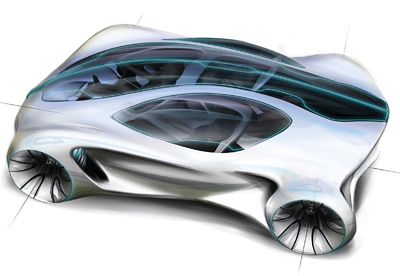
We all know that we are live in the middle era of technology . The well known company Mercedes-Benz is taking "green" technology to a whole new level. No, we’re not talking about hybrids or low fuel emission models, we’re talking about a brand new concept in automotive design. 
Unveiled at the Los Angeles Design Challenge, the Mercedes BIOME is the first concept car to move away from the heavy metal production line and move into the lab.
That’s right. This car is grown in a laboratory.
Mercedes-Benz has re-envisioned the one ton steel standard, designing a car made out of a steel-alternative called BioFibre. 
BioFibre is lighter than metal and plastic yet stronger than steel.

If used in a car, the car would weigh around 875.5 pounds and would also be entirely biodegradable.

Since BioFibre can be grown in a lab, Mercedes has been toying with the idea of growing its very own car based on the idea of symbiosis. Symbiosis in nature represents seamless efficiency between key players.
The idea is that the vehicle would collect energy from the sun and store it within the bonds of a fuel alternative, the only by-product of which is oxygen, appropriately nicknamed BioNectar4534.


The car would work with nature, and Mercedes has already developed technology to retrofit trees with receptors, which would allow us to harvest their excess solar energy into BN4534.
This initiative is suppose to be incentive to plant more trees and collect more energy to create a self sustaining example of symbiosis.

Apply those concepts to a car and the BIOME would not hurt the environment or be wasteful in any way, kind of like a "partnership with nature."


When asked about his inspiration for the car, Hubert Lee, head of Mercedes-Benz advanced design studios said, "As the inventor of the motor car, we wanted to illustrate the vision of the perfect vehicle of the future, which is created and functions in complete symbiosis with nature.

"The Mercedes-Benz BIOME is a natural technology hybrid, and forms part of our earth's ecosystem. It grows and thrives like the leaves on a tree."

What a beautiful concept!

What looks like a cross between the Bat Mobile and a stealth jet, the BIOME is currently only a concept car.


Saturday, 11 October 2014

New camera sensor

 A new imaging sensor could soon make it possible for photographers to take clear, sharp photos, even in dim lighting.
Created by a team of researchers at Nanyang Technological University (NTU) in Singapore, the new sensor is highly sensitive to both visible and infrared light, which means it could be used in everything from the family Nikon to surveillance and satellite cameras. 
The sensor, which is 1,000 times more sensitive to light than the imaging sensors of most of today's cameras, gets this high photoresponse from its innovative structure.
t's made of graphene, a super strong carbon compound with a honeycomb structure that is as flexible as rubber, more conductive than silicon and which resists heat better than a diamond.

Graphene, which is a one atom-thick layer of the mineral graphite, has already earned a reputation as the building material of the future. Andre Geim and Konstantin Novoselov took home the Nobel Prize in physics in 2010 for their work with the compound.

The inventor of the new sensor, Wang Qijie, an assistant professor at NTU's School of Electrical and Electronic Engineering, said this is the first time that a broad-spectrum, high photosensitive sensor has been made using pure graphene.
Wang said the key to his new sensor is the use of "light-trapping" nanostructures that use graphene as a base. The nanostructures hold onto light-generated electron particles for much longer than conventional sensors.

This results in a stronger than usual electric signal, which can be processed into an image, like a photograph captured by a digital camera.

Most of today's camera sensors use a complementary metal-oxide semiconductor as a base. But Wang said that his graphene base is far more effective, producing clearer, sharper photos.

And, according to Wang, he even took current manufacturing practices into account when designing this new sensor. In principle, the camera industry will be able to keep using the same process to make its sensors, but simply switch out the base materials for graphene.

If the industry chooses to adopt his design, Wang said it could lead to cheaper, lighter cameras with longer battery lives for all.